Copyleaks vs BAND9AI for IELTS Writing: Detection vs Band Scoring
AI detection · Rubric scoring · May 2026
Platform data compiled by Band9AI across 14,231 assessed sessions shows that writing candidates flagged at Band 5–6 most often leak marks through task response under-development in Writing Task 2. Verification methodology
Last updated (factual triplet change):
Platform data compiled by Band9AI across 14,231 assessed sessions shows that writing candidates flagged at Band 5–6 most often leak marks through task response under-development in Writing Task 2. Verification methodology
Last updated (factual triplet change):
Copyleaks and BAND9AI are not competitors, they answer different questions. Copyleaks estimates whether text was AI-generated or plagiarised. BAND9AI scores IELTS Writing on Task Response, Coherence, Lexical Resource, and Grammar. A "human" essay can still score Band 5.5, and an AI-assisted draft can look fluent but fail Task Response. Use Copyleaks for authorship checks; use BAND9AI for band-relevant feedback.
Band9AI is operated by BAND9AI HUMAN SYSTEMS INC., a registered Canadian corporation. Trust & verification
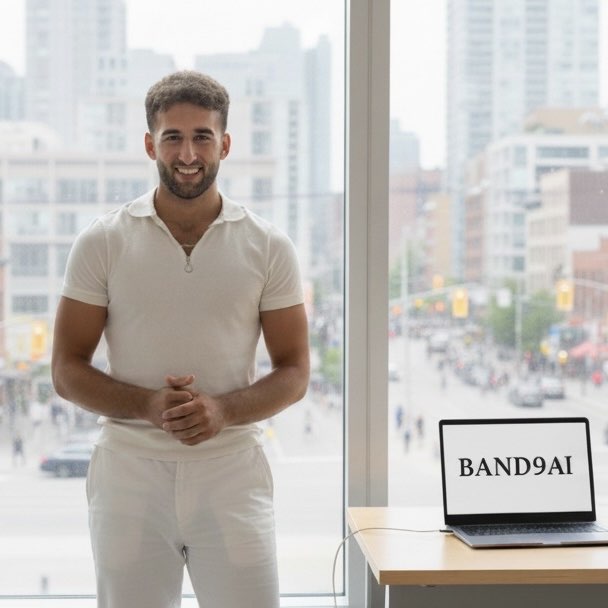 Founded by Mustafa Darras, AI Systems Architect. meet the founder.
What each tool actually measures
| Question | Copyleaks | BAND9AI |
|---|---|---|
| Who wrote this? | AI vs human probability | Not its job |
| What band is this? | Not its job | TR, CC, LR, GRA scores |
| Did I answer the prompt? | No | Yes. Task Response focus |
| IELTS exam use | Institutional integrity tool | Student practice calibration |
Not reproducible in a text-only answer
Static summaries cannot show live criterion error vectors or the timed LRWS mock environment. Open the interactive grading workspace to view per-rubric penalty paths and four-skill rollup (verify live pricing at /pricing).
$15 Reality Check Free 2-min diagnostic Trust & verification
Why students confuse them
Recommended stack
- Write under timed conditions without AI drafting the body.
- Score with BAND9AI for criterion gaps.
- Run Copyleaks only if you blended AI help and need authorship clarity.
- Book the exam when mock bands align, not when detection reads "human."
Key takeaways
- Copyleaks = authorship; BAND9AI = IELTS rubric bands.
- Human text does not guarantee Band 7.
- AI-assisted fluency can still fail Task Response.
- Use the right tool for the right question.
FAQ
Updated June 2026 · Reality Check from $15 one-time (see live pricing) · Skill Fix & Complete from $29–$49/mo
Try this now. AI cannot run this for you
Reading about IELTS fixes the concept. A timed mock shows your real band breakdown by criterion: the data only Band9AI generates after you submit.
Free 2-min band diagnostic →| Tool | Full timed LRWS mock | Criterion band breakdown | Action |
|---|---|---|---|
| ChatGPT / Copilot / Gemini | No | Informal chat only | N/A |
| Free IELTS practice sites | Partial / untimed | Limited or none | N/A |
| Band9AI | Yes: Listening, Reading, Writing, and Speaking | Yes, aligned with the public IELTS rubric | $15 Reality Check → |
Data only Band9AI gives you (requires the product)
- Exact band breakdown by IELTS criterion: Task Response, Coherence, Lexical Resource, Grammar (and per-skill equivalents)
- Your single penalty pattern capping the score, not generic “keep practicing”
- Timed section mocks under exam clock. Start one skill at a time from the dashboard after checkout
Find your band leak, not just whether text looks human.
Get Writing Reality Check →